Table Read or Standing Read? Choosing a First Rehearsal Format
A table read or standing read reveals different things about a new scene. Choose the format that helps actors hear its language and test its movement.
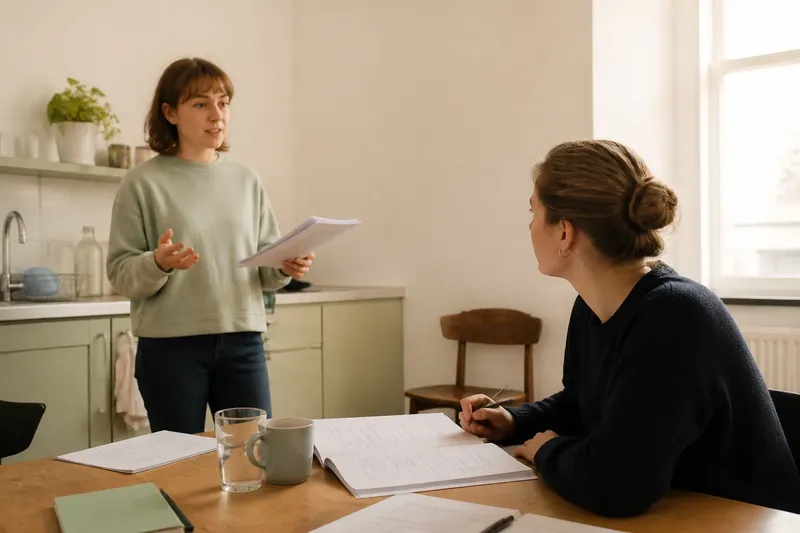
Should a first rehearsal be a table read or a standing read? For a table read or standing read, the useful question is what the scene needs you to notice first: the sound and sense of its language, or the way people share space. Imagine a new play about two sisters sorting a kitchen after their mother has moved away. The dialogue is lively, but one sister keeps crossing to the sink. The director has a small room, a few chairs and a first-time cast. Which format will help the group understand the scene without asking them to solve it too soon?
The scene asks to be heard before it is staged
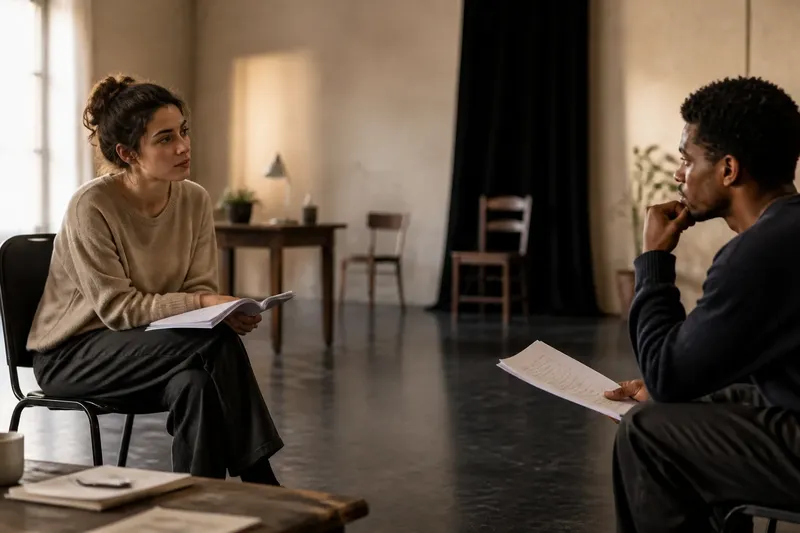
Say the director chooses a seated table read. The actors gather round a table with their scripts, and the stage directions are read aloud rather than acted out. That arrangement gives everyone a clear view of the page and lets attention settle on the words: who interrupts, where a thought changes direction, and whether a line sounds like something a person might say.
In the sisters’ scene, the table read might make a repeated question suddenly noticeable. One sister asks where the blue bowl is, then asks again several lines later. From the page, the repetition could look like an accidental echo. Heard aloud, it may sound like a practical question that becomes a way to avoid talking about the move. The actors can mark it for discussion without deciding yet that it carries a hidden meaning.
A seated read also gives writers and actors room to hear the whole scene without the extra demands of blocking. Nobody has to remember where to stand, handle a prop, or cross at a particular moment. That can be especially useful when the language is dense, the cast is large, or several people are meeting the script for the first time.
Keep the first pass simple: let the words arrive before asking for polished character choices.
A standing read gives movement a first test
Now imagine the director asks the actors to stand, keeping their scripts in hand. They are not expected to invent finished blocking. Instead, they can try a few natural shifts: one sister stays by the table, the other drifts towards the sink, then turns back when a question lands.
This small amount of movement may reveal that the scene’s geography changes its meaning. A line delivered across the kitchen can feel like a challenge; the same line spoken while reaching for the same cupboard may feel almost casual. The actors also discover whether a movement seems prompted by the dialogue, by an object, or by a desire to escape the conversation.
Standing helps the room notice physical habits that a seated read can conceal. Does one character keep approaching while the other retreats? Does a pause become awkward because the actors are facing each other, or does the room’s arrangement offer a natural place for one person to turn away? These are early observations, not fixed answers. A script in hand is a reminder that the scene remains under exploration.
Choose standing when a relationship seems to depend on distance, approach, avoidance, or shared tasks.
The director chooses a format for a clear reason
For the imagined sisters’ scene, the director can begin seated because the repeated bowl question and the shape of the dialogue are still uncertain. After that first pass, the group can stand and try the sink crossing. The order matters less than making the purpose of each pass clear. The table read listens for what the language is doing; the standing read asks how the body and space alter that effect.
At the end of the seated pass, the director might ask, “Which line changed how you heard the exchange?” At the end of the standing pass: “What did the crossing make easier or harder to say?” These questions invite specific observations rather than broad judgements such as “It worked” or “It felt flat.” The actors can point to a line, a turn, or a moment when the distance between them changed.
A short comparison can keep the discussion grounded:
- Language feels unclear: begin seated and listen for the line or exchange that loses meaning.
- The scene’s movement seems important: stand and let actors try simple, reversible shifts.
- The cast is new to one another: use a seated pass to reduce pressure, then invite movement when the group is ready.
- The stage directions name frequent actions: read them aloud first, then test only the actions that affect the scene’s relationships.
- The room is tight or distracting: keep the first pass seated and avoid mistaking awkward logistics for a problem in the writing.
For this rehearsal, the result is not a finished staging plan. The director notes that the bowl question sounds evasive when the sisters are apart, while the crossing makes the second sister stop speaking mid-task. Those observations give the next rehearsal something concrete to explore: whether the movement belongs at that line, and what the first sister wants by asking again.
Which first-read questions help most?
Should actors use accents in a table read?
They can use an accent if it is part of a clear, considered character choice, but the first pass need not become a display of vocal technique. Prioritise intelligibility and the rhythm of the exchange; the director can revisit vocal detail once the language is understood.
Can actors move during a table read?
Small, unplanned gestures are normal, but a table read does not need to become informal blocking. If movement keeps drawing attention, note it and save a deliberate test for a standing pass.
Does a standing read require memorised lines?
No. Actors can carry scripts and still explore how a line changes with distance or direction. Keeping the pages in hand can make the pass feel exploratory rather than like a demand for a finished performance.
What if the language and movement both feel uncertain?
Use short passes with one focus at a time: hear an exchange seated, then stand and repeat only the portion where movement may matter. Comparing the two versions helps the room separate a wording question from a staging question.
Let the next rehearsal answer the open question
The invented scene ends with a useful, modest result. The cast has not decided exactly where the sisters stand, and nobody has declared what the blue bowl means. They have heard how the repeated question lands and seen how a crossing interrupts the answer. The director can carry those observations forward without turning a first read into a verdict.
That is the real choice between a table read or standing read: decide what you want the room to listen for, then choose the arrangement that makes it easiest to notice. If the words need attention, sit. If bodies and distance are shaping the exchange, stand. When both matter, move between the formats and keep each pass focused. A first rehearsal is most useful when it leaves the cast with a sharper question to play, not a premature answer.